


February 12, 2026
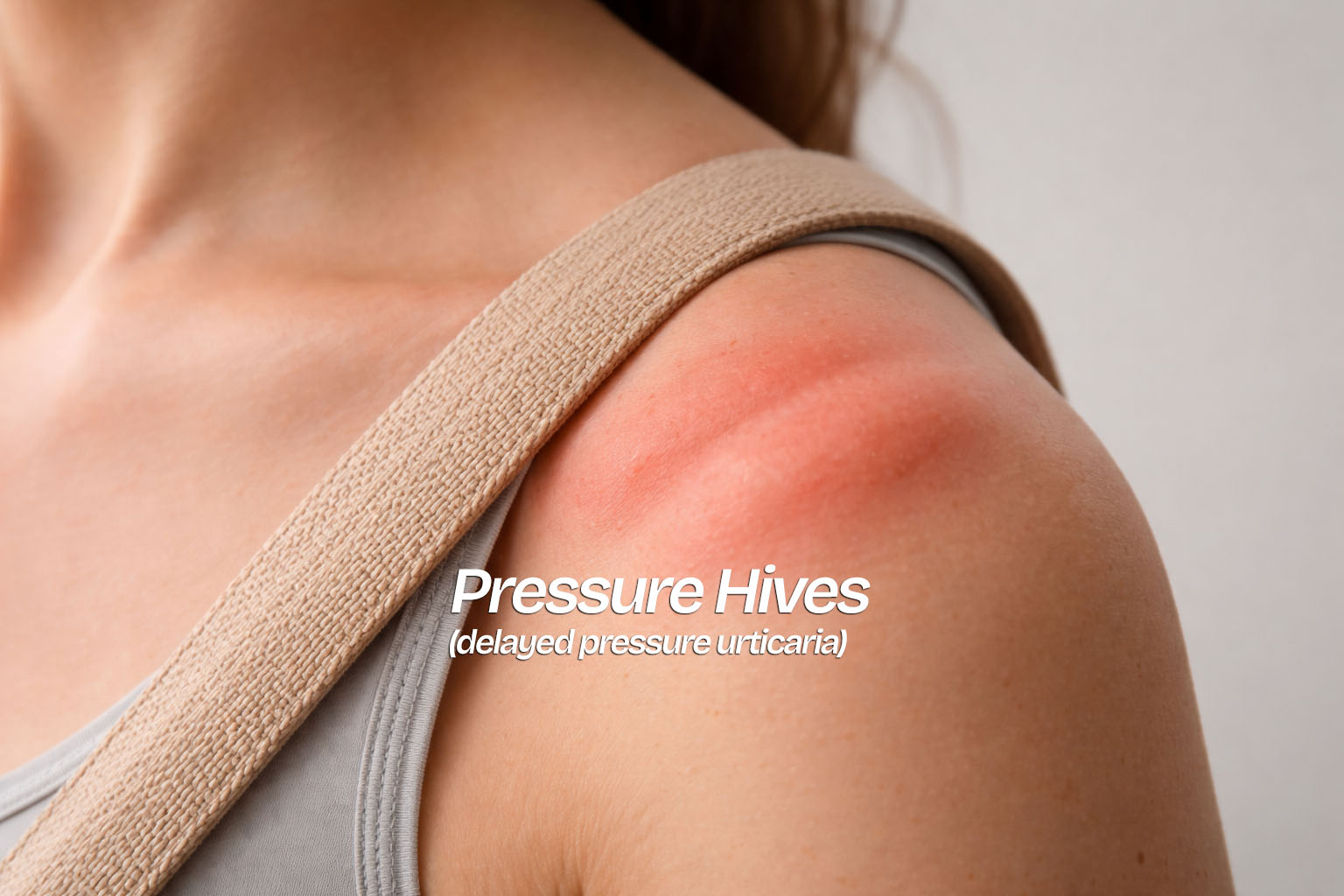
Pressure hives are not your typical itchy rash. They are deeper swellings that show up after sustained pressure on the skin. And unlike common hives, they often appear hours later.
For a spa that specializes in foot reflexology, Ashiatsu, Thai massage, and deep tissue bodywork, this matters.
If you have pressure hives and are considering massage, you should understand how the condition works and how your session can be adjusted safely.
Pressure hives are medically known as delayed pressure urticaria, a subtype of chronic inducible urticaria. The trigger is sustained mechanical pressure.
DermNet defines it clearly:
“Pressure urticaria is a form of chronic inducible urticaria characterised by the appearance of weals and/or angioedema after pressure to the skin.”¹
Angioedema refers to deeper swelling beneath the surface of the skin. This is why pressure hives often feel firm, sore, or burning rather than simply itchy.
The British Association of Dermatologists explains the delayed nature:
“Usually the swelling develops several hours later. It can be painful and lasts longer than a day.”²
This delay is what makes the condition confusing. The swelling that appears at 8 PM may be from pressure applied at 1 PM.
Pressure hives are usually caused by routine mechanical forces:
The NHS includes “scratching or pressing on your skin, such as wearing itchy or tight clothing” among known triggers for hives.³
Now consider what happens during bodywork.
Massage intentionally applies pressure.
That does not automatically mean massage is unsafe. It means pressure must be approached intelligently.
Yes, it can. Particularly techniques that involve:
The American Academy of Allergy, Asthma & Immunology describes delayed pressure urticaria as:
“Recurrent erythematous and often painful swellings that take several hours to develop after the skin is exposed to sustained pressure.”⁴
The key word is sustained.
Gliding strokes are less likely to trigger a reaction than holding firm pressure in one spot for extended time.
The timing also matters. A client may feel completely fine when they leave the spa and notice swelling later that evening.
Reflexology involves focused pressure on specific points of the feet. For most people, this is therapeutic. For someone with pressure urticaria, prolonged heavy pressure on a single reflex point could potentially provoke a delayed response.
That does not mean reflexology must be avoided.
It means:
Clients with known pressure urticaria should tell their therapist before the session begins. This allows planning rather than reacting later.
In body massage, sustained compression techniques may need modification. Examples include:
Adjustments may include:
It is not only about how hard the pressure is. It is about how long it stays in one place.
If you tell us you have pressure hives, you should expect:
You should also expect honesty. If your history suggests that strong sustained compression regularly triggers swelling, deep heavy Ashiatsu may not be the right choice.
That does not eliminate your options. It simply shifts the strategy.
Pressure hives are usually localized to pressure sites. However, if you experience swelling of the lips, tongue, or throat, or any breathing difficulty, that is not a spa issue. That is a medical emergency.
For ongoing management, specialists may recommend antihistamines or other therapies. AAAAI notes that delayed pressure urticaria “is one of the most difficult to treat types of urticaria,” and antihistamines “are often not effective.”⁴
If your condition is severe or unpredictable, consult an allergist or dermatologist before scheduling intense bodywork.
If you suspect pressure hives but are unsure, test your body gently first:
Data clarifies patterns.
Many clients with mild pressure urticaria tolerate massage well when pressure is mobile and not prolonged in one area.
Pressure hives are mechanical and delayed. Massage is mechanical and controlled.
When both sides understand the condition, bodywork can often be modified safely and intelligently.
If you experience pressure hives and are considering reflexology or full body massage, mention it when booking or during intake. Your therapist can adjust technique accordingly.
At Reflexology Plus, sessions are customized. If pressure hives are part of your medical history, your treatment plan will reflect that.
Quick answers to the questions people usually ask next.

