


January 4, 2026
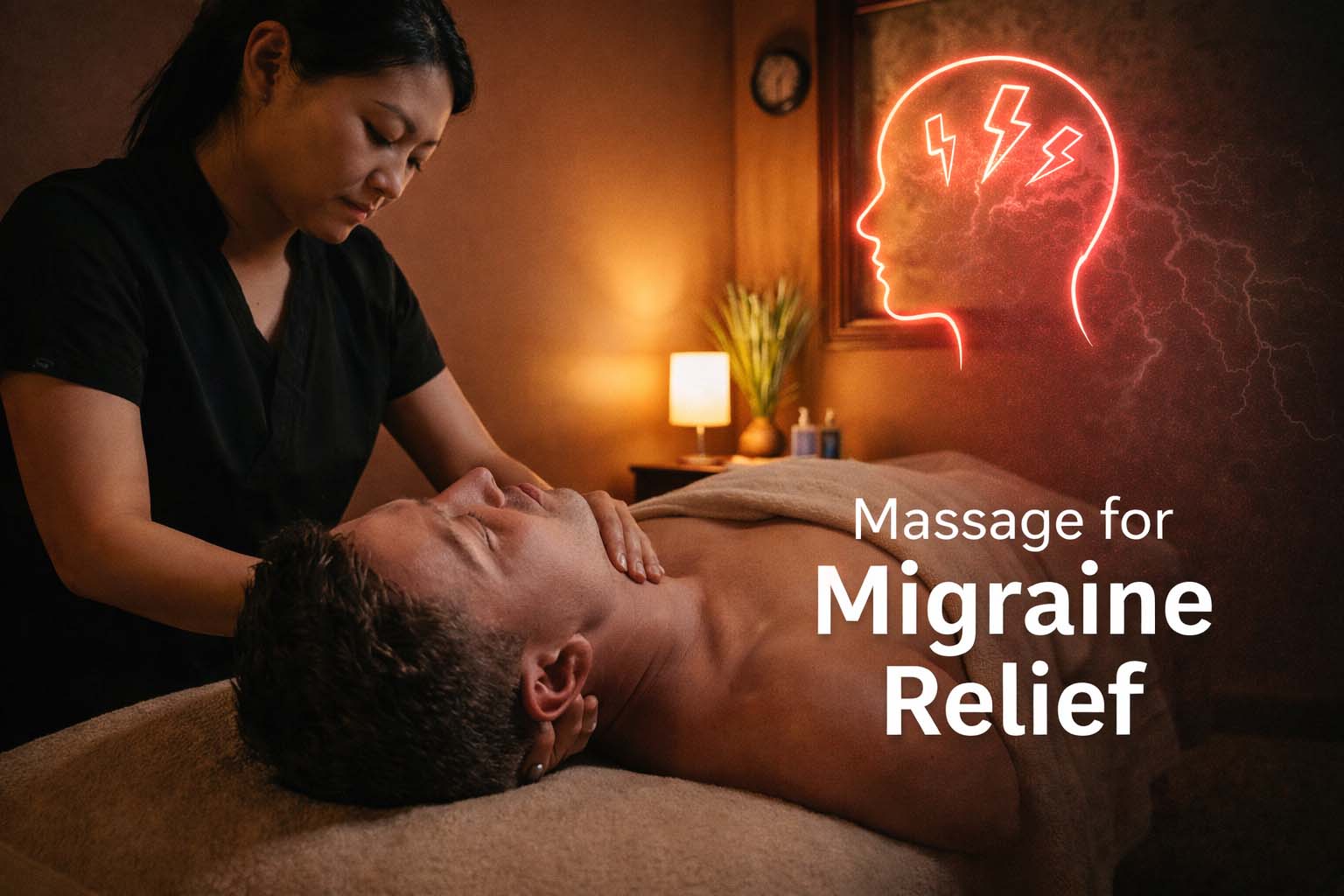
Migraines are not simply bad headaches. They are a neurological condition that can involve intense head pain, nausea, light and sound sensitivity, visual disturbance, dizziness, and cognitive fatigue. For many people, migraines also overlap with chronic stress, poor sleep, jaw clenching, and persistent tension in the neck and shoulders.
This overlap is where massage becomes relevant.
Massage does not cure migraine. That claim would not be accurate. What massage may do, for some people, is reduce the frequency or intensity of attacks, improve sleep quality, and help manage physical and nervous-system stressors that often amplify migraine symptoms. The scientific literature is not massive, but it is substantive enough to justify a closer look.
Migraine involves altered pain processing in the nervous system, particularly pathways associated with the trigeminal nerve and central sensitization. Massage does not directly change migraine neurobiology. However, migraines are strongly influenced by modulating factors, including stress load, sleep quality, muscular tension, and ongoing sensory input from the head and neck.
Massage may influence migraines through several plausible mechanisms.
Stress is one of the most commonly reported migraine triggers. Massage has been shown to reduce markers associated with stress arousal and anxiety, while increasing parasympathetic nervous system activity. In a randomized controlled trial, participants receiving massage demonstrated reductions in stress-related measures during treatment alongside improvements in migraine frequency and sleep quality.
Many people with migraines experience chronic tension or tenderness in the cervical muscles, upper shoulders, and suboccipital region. These tissues share neurological connections with headache pathways. Reducing sustained muscular tension and myofascial irritation may decrease ongoing nociceptive input into the trigeminocervical complex. A randomized controlled trial examining myofascial release and stretching techniques reported improvements in migraine-related clinical outcomes.
Sleep disturbance both triggers migraines and worsens pain sensitivity. Several massage studies report improvements in sleep duration and perceived sleep quality. Even modest improvements in sleep can translate into fewer migraine days or reduced symptom severity over time.
The research on massage for migraine is best described as limited but suggestive. Studies are often small, intervention styles vary, and placebo control is difficult in hands-on therapies. That said, the findings are consistent enough to support massage as a reasonable complementary approach.
One frequently cited randomized controlled trial found that participants receiving massage therapy experienced reductions in migraine frequency and improvements in sleep quality compared to controls, along with reductions in stress-related physiological markers during sessions.
More recent trials examining myofascial release and stretching techniques applied to the neck and upper back have reported improvements in migraine-related outcomes, supporting the idea that addressing musculoskeletal contributors may benefit certain migraine profiles.
A systematic review of manual therapies for migraine concluded that while evidence quantity is limited, there are signals of benefit, particularly when massage is used consistently rather than as a one-off intervention.
Broader integrative medicine reviews classify massage as a supportive or adjunctive option rather than a primary migraine treatment, emphasizing its role alongside lifestyle and medical management rather than as a replacement.
The U.S. National Center for Complementary and Integrative Health (NCCIH) characterizes the evidence for massage in migraine as limited but potentially helpful for some individuals, particularly in relation to stress and sleep outcomes.
Not all massage styles are equally appropriate for migraine support. The most helpful approaches tend to calm the nervous system, avoid overstimulation, and address common areas of tension associated with migraines.
Slow, controlled work targeting the upper trapezius, levator scapulae, scalenes, and suboccipital muscles is often more effective than aggressive pressure. Precision and pacing matter more than intensity.
Rather than chasing pain, these approaches aim to reduce sustained tissue tension and sensitivity. Several migraine-focused studies explicitly used myofascial techniques rather than deep tissue massage.
Gentle scalp massage, jaw decompression, and facial muscle relaxation can be deeply calming for some people. For others, especially during heightened sensitivity, even light touch in these areas may feel overstimulating. Individual response varies.
Some clients respond best to lighter, rhythmical techniques that emphasize relaxation and nervous-system regulation rather than structural change. One NCCIH-referenced study comparing massage styles found reductions in migraine frequency across approaches, though no single style was shown to be superior.
Migraine sensitivity changes depending on where a person is in their migraine cycle.
This is typically the most appropriate time for therapeutic massage. The nervous system is more tolerant, and work focused on stress reduction and muscular tension may help reduce future attacks.
Some individuals find that gentle massage during this phase helps soften or delay an attack, while others find it overstimulating.
Many people prefer darkness, stillness, and minimal sensory input. If massage is used, it should be brief, gentle, and entirely comfort-based.
A migraine-focused massage session often looks different from a standard relaxation or deep-tissue massage.
Common features include:
Massage should never push through sharp, electric, nauseating, or headache-amplifying sensations.
Massage is a supportive wellness service and is not a medical treatment for migraine or headache disorders. If your migraines are changing in pattern or severity, or are being evaluated by a medical professional, massage should be considered a complementary, comfort-based approach rather than a substitute for clinical care.
The most practical way to assess benefit is to approach massage as a short trial rather than a single experience.
A reasonable approach:
When massage is helpful, benefits tend to appear gradually over several weeks rather than immediately after one session, consistent with how outcomes were assessed in clinical trials.
Massage is not a cure for migraine, and the evidence does not support framing it that way. However, available research suggests that massage may help some individuals reduce migraine frequency, improve sleep, and better manage stress and musculoskeletal tension that contribute to migraine burden.
For people whose migraines are influenced by stress, poor sleep, or chronic neck and shoulder tension, massage represents a reasonable, low-risk complementary option when delivered thoughtfully and conservatively.
Quick answers to the questions people usually ask next.

