



April 1, 2026
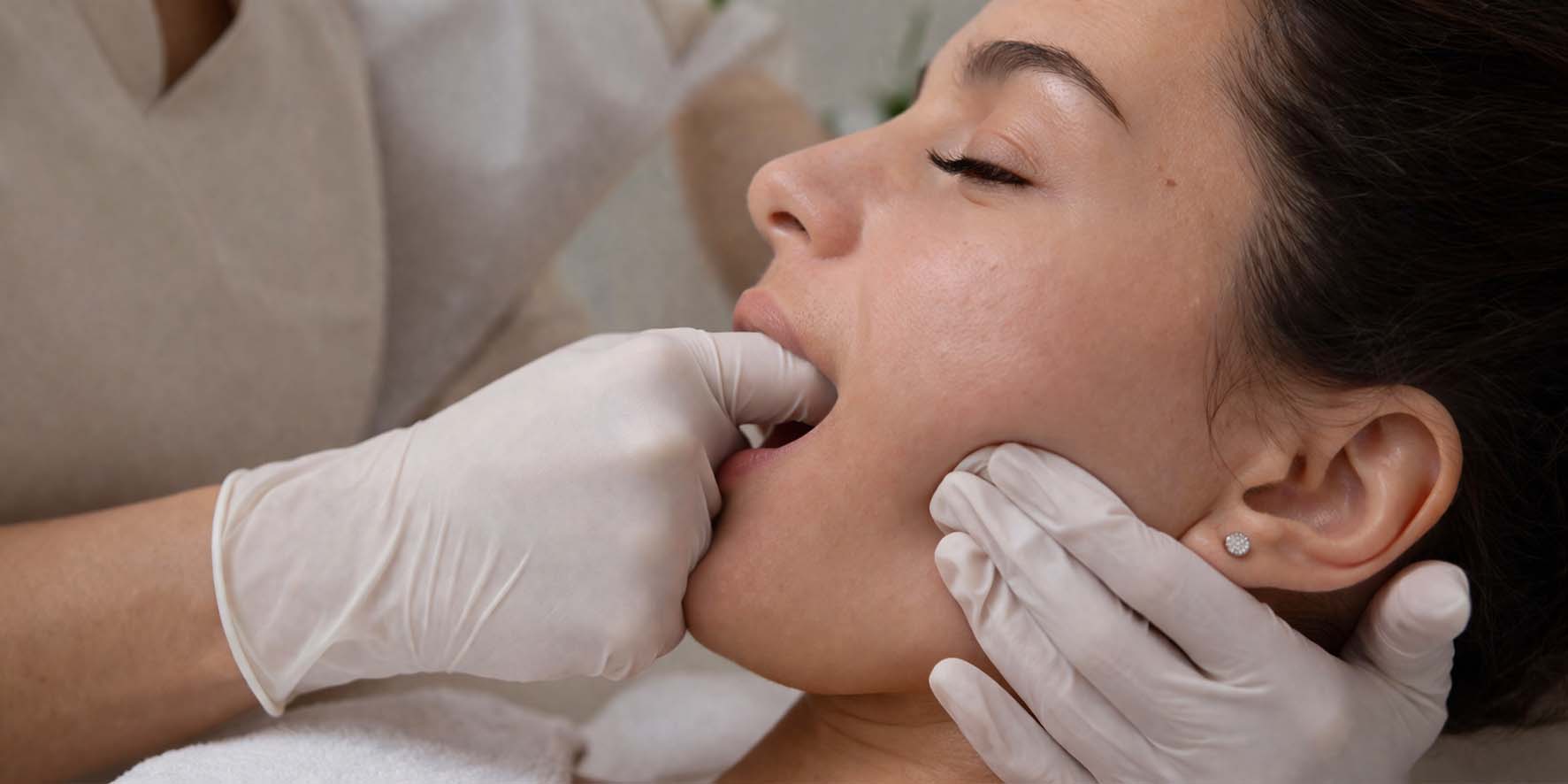
Buccal massage has become one of the most talked-about facial treatments in recent years, but many people still are not fully sure what it is. The name sounds technical. The method looks unusual. Social media often treats it like either a miracle or a gimmick. In reality, it is neither. Buccal massage is a specialized facial massage technique that works the cheeks, jaw, and lower face from both outside and inside the mouth.
The word “buccal” refers to the cheek area. In practice, buccal massage means the practitioner works the facial muscles externally and, with gloved hands, internally through the mouth as well. That internal access is what makes the treatment different from standard facial massage.
Instead of only working at the surface, buccal massage allows a trained practitioner to address deeper tension in the cheek and jaw muscles. For clients who carry stress in the lower face, this can make the treatment feel more focused, more structural, and more intentional than a typical facial massage.
Most clients book buccal massage for one or more of these reasons:
Many people carry far more tension in the jaw than they realize. Clenching, grinding, screen time, stress, and posture can all contribute to a lower face that feels dense, tired, or overworked.
A session usually begins with external facial massage to warm the tissues and start relaxing the neck, jawline, and cheeks. After that, the intraoral portion is performed with gloves. The practitioner works carefully inside the mouth while supporting the tissue from the outside.
This allows the muscles to be approached from both directions at the same time. That dual access is what gives buccal massage its distinct feel. The work should feel precise and controlled, not rough or careless.
Buccal massage can offer real value, but the benefits should be described honestly. It may help:
These are reasonable wellness and appearance-based benefits. What buccal massage should not be sold as is a permanent lifting treatment, a cure for TMJ disorders, or a medical reshaping procedure.
The strongest claims around buccal massage should stay modest. Massage and therapeutic touch are broadly associated with improved relaxation and well-being. Small studies on facial massage suggest it may temporarily improve circulation and create short-term visible effects such as mild tightening or refinement in facial appearance. That said, the evidence is still limited.
This means the treatment is best positioned as a skilled wellness service with temporary aesthetic benefits, not as a dramatic medical or cosmetic intervention.
Jaw tension is one of the most common reasons people seek out buccal massage. Clients who clench or grind may feel relief simply from having the muscles of the cheeks and jaw worked carefully and thoroughly.
That said, jaw pain is not always simple. Some people with temporomandibular joint issues may feel better with massage, but buccal massage should not be presented as a medical treatment for TMJ disorders. Clients with ongoing pain, locking, bite changes, or severe symptoms should seek proper evaluation.
Buccal massage is often a great fit for clients who:
This service may need to be postponed or avoided if a client has:
Good screening matters. As with any specialized service, timing and suitability are part of doing the treatment well.
The best way to think about buccal massage is not transformation, but refinement. Clients may notice:
Some clients feel immediate relief. Others simply enjoy the unusual precision of the treatment. The effects vary, and long-term improvement usually depends on the bigger picture too, including stress, sleep, hydration, posture, and clenching habits.
Buccal massage is a strong service without exaggerated claims. Clients do not need fantasy. They need clarity. The treatment is appealing because it is specific, skilled, and different from the usual menu of facial services.
The right positioning is simple:
Buccal massage stands out because it combines relaxation, precision, and visible refinement in one treatment. For clients who want deeper facial work and a more intentional approach to the lower face, it can be one of the most interesting services on the menu. At Reflexology Plus, that kind of detail matters.
Quick answers to the questions people usually ask next.

